Kimodo: Generating Controllable Human and Robot Motion
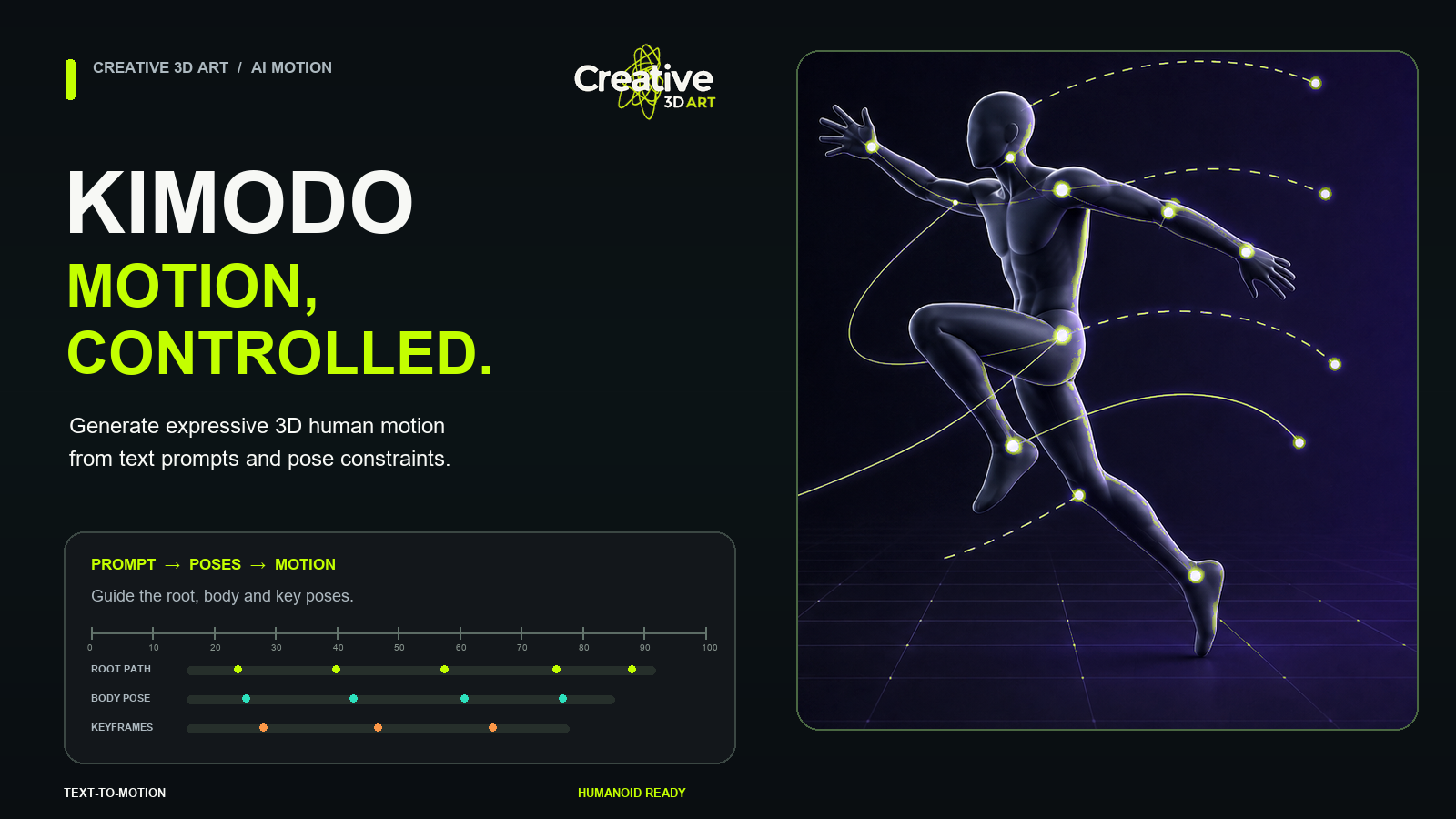
How Kimodo Advances Human and Robot Motion Generation
Human motion data is used in robotics, simulation, and digital entertainment. But creating realistic motion that can also be precisely controlled remains a challenge, particularly when public motion-capture datasets are limited. Kimodo tackles this problem with a 3D motion generation model guided by text prompts and constraints on body poses and paths.
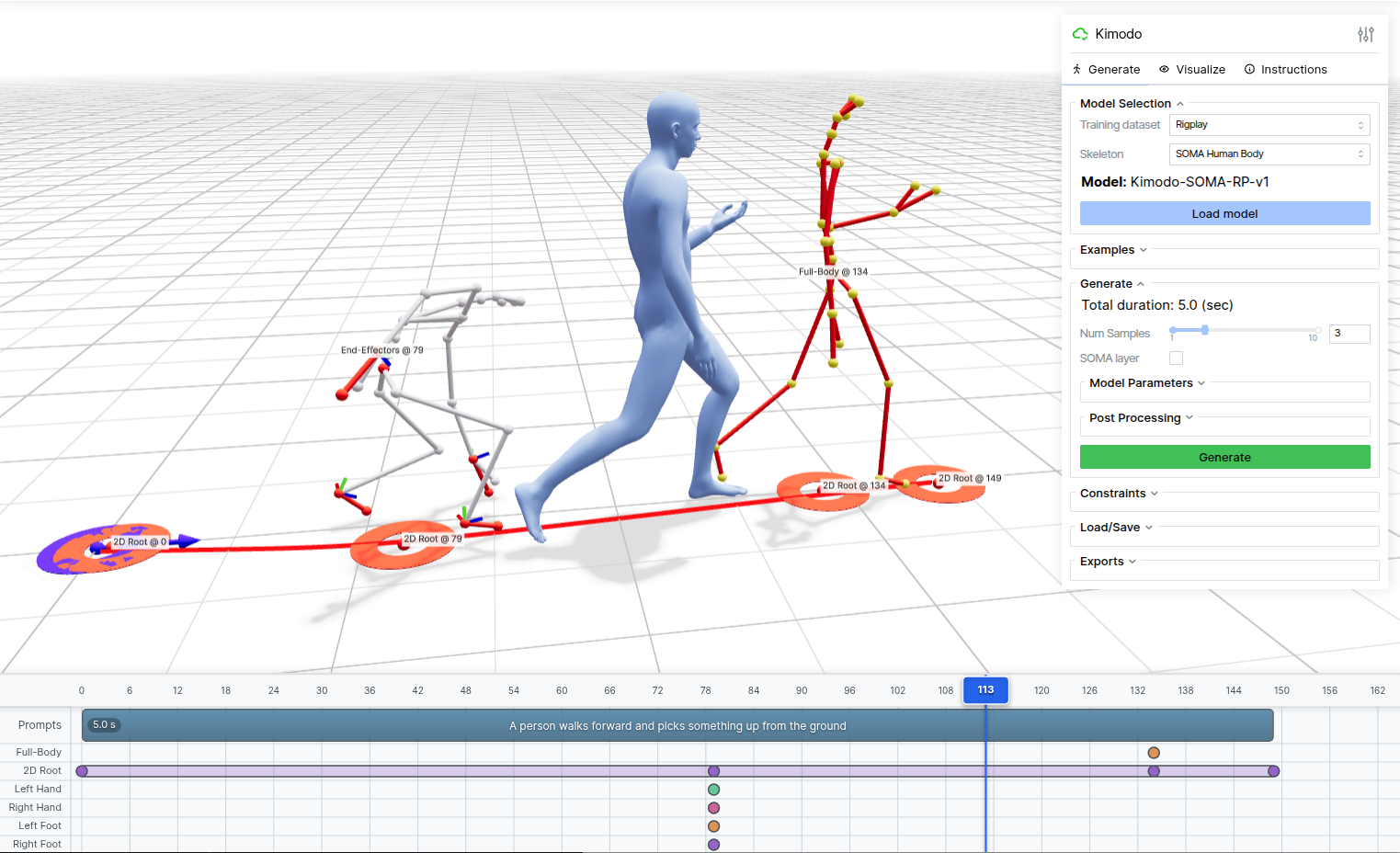
Generating Motion from Text
Users can describe the motion they want, such as walking, dancing, interacting with objects, gesturing, or performing stylized movements. A sequence of prompts can also guide motion through multiple stages.
Controlling Motion with Constraints
Kimodo offers more control than text prompts alone. Users can specify body poses at particular frames, constrain the positions or rotations of the hands and feet, or provide 2D waypoints and paths to guide a character’s movement. These constraints can be combined with text prompts to create motion suited to a particular scene.
From Digital Characters to Robots
Kimodo can generate motion for digital characters and create training demonstrations for humanoid robots. A version trained on the G1 robot skeleton can produce motion that can be exported to tools such as ProtoMotions and MuJoCo for training physics-based control systems.
Data and Tools
Kimodo was trained in part on Bones Rigplay, a dataset containing more than 700 hours of motion-capture data paired with text descriptions. The project also provides source code and a motion-authoring demo, with support for generating motion on the SOMA and G1 skeletons and exporting it for use in other applications.
Conclusion
Kimodo combines text-based generation with precise control over poses and paths, supported by a large motion-capture dataset. These capabilities make it a promising tool for creating digital-character animation and preparing motion demonstrations for humanoid robots.